


By CoinEpigraph Editorial Desk | December 11, 2025
A subtle but consequential shift emerged in U.S. regulatory discourse this week when SEC Chair Paul Atkins indicated that a large share of ICO-era token models should not fall under securities regulation. The remark, made during a policy discussion on market modernization, did not seek headlines. It did not promise a deregulatory wave. But it did introduce a philosophical line that may shape the next era of U.S. digital-asset oversight.
The implications do not lie in the fate of past ICOs.
They lie in the architecture of future markets.
A Move Away From Securities Maximalism
For nearly a decade, the regulatory perimeter for digital assets in the United States has defaulted to the Howey test. In the absence of statutory guidance, token issuance—functional or otherwise—was often presumed to fall within the SEC’s jurisdiction unless clearly proven otherwise. This led to a climate of enforcement-driven interpretation rather than a framework built on statute, taxonomy, and supervisory intent.
Atkins’ remarks mark a departure from that posture.
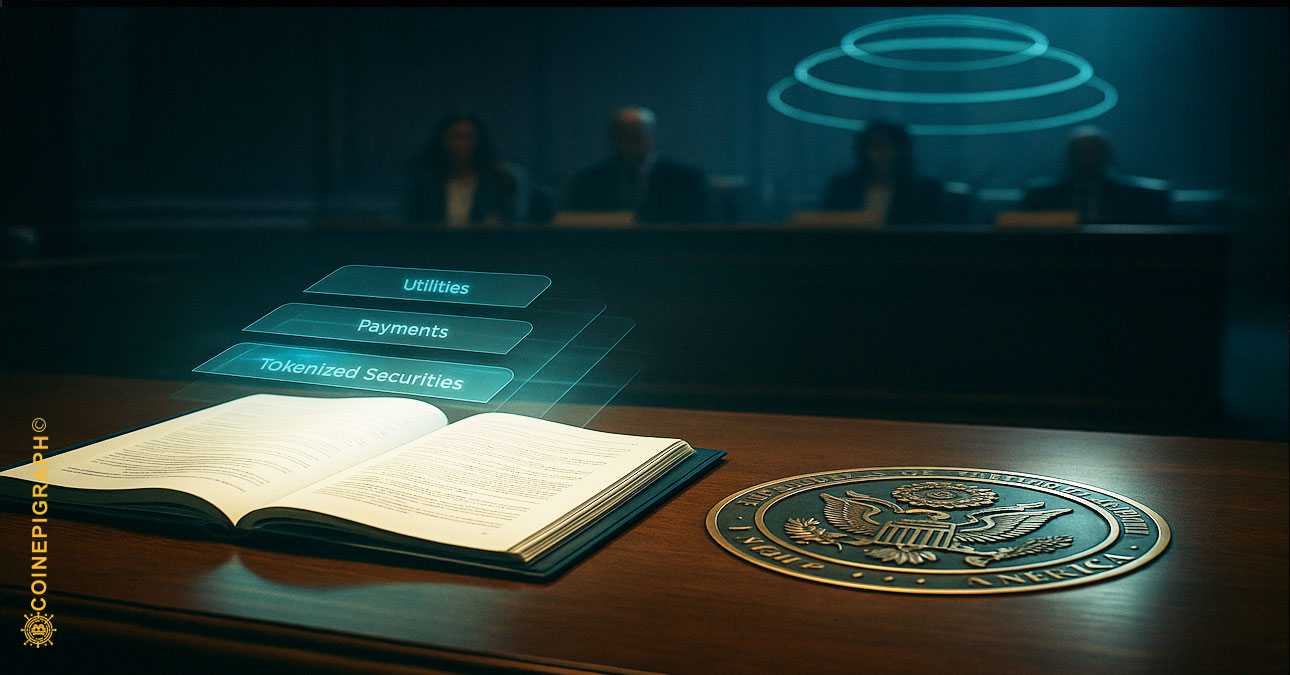
He distinguished between tokenized securities—squarely within the agency’s remit—and a broad category of digital assets that function more like payment tokens, access rights, or network utilities. These, he argued, do not align with the economic substance of securities and should not be treated as such.
This is not deregulation.
It is reclassification.
And in regulatory systems, classification is destiny.
A Regulatory Perimeter Begins to Form
The Chair’s framing suggests an early movement toward a system in which:
- tokens with capital-market characteristics remain regulated as securities;
- tokens serving functional or network purposes are supervised elsewhere;
- enforcement focuses on conduct rather than broad category assumptions;
- oversight transitions from interpretive enforcement to statute-aligned taxonomy.
This approach mirrors the regulatory logic shaping other global markets.
Global Alignment: The U.S. Steps Toward a Modern Framework
Across Europe, Asia, and parts of the Middle East, regulators have already moved to classify digital assets according to economic function—separating payment tokens, utility tokens, asset-referenced tokens, and capital-market products.
- EU MiCA defines regulatory perimeters with category clarity.
- Singapore MAS regulates payments and capital-market products under different statutes.
- Japan’s FSA distinguishes exchange-listed cryptoassets from tokenized securities.
- The U.K. Treasury has adopted a functional, activity-based approach.
In this context, Atkins’ remarks appear less radical and more aligned with the regulatory trajectory of modern financial jurisdictions.
The U.S. is not loosening oversight.
It is adjusting its posture to global norms, where form follows function and supervision follows economic reality.
The Implication for Capital Formation
A classification shift would not revive the ICO era.
It would instead enable a healthier, better-defined environment for:
- tokenized networks,
- programmable financial instruments,
- on-chain identity standards,
- payment-layer innovation,
- and compliant tokenization of real-world assets.
In today’s market, uncertainty remains a larger barrier than oversight itself.
A defined regulatory perimeter could:
- reduce litigation overhang,
- improve institutional participation,
- channel innovation toward compliant models,
- and support the next phase of digital-market infrastructure.
Regulation is the foundation of trust.
Classification is the foundation of regulation.
What This Does Not Mean
The Chair’s remarks do not:
- exempt fraudulent offerings;
- weaken enforcement actions against tokenized securities;
- diminish investor protections;
- validate speculative markets;
- alter the status of existing cases;
- or reduce statutory obligations for issuers.
If anything, narrowing the agency’s perimeter strengthens its capacity to supervise—and enforce—where its authority is clearest.

A Structural Re-calibration, Not a Policy Revolution
The significance of Atkins’ statement lies in what it signals:
U.S. digital-asset oversight may be moving from an era defined by enforcement heuristics to one defined by classification, purpose, and statutory alignment.
This is how market architecture evolves—incrementally, then structurally.
If formalized, the shift would place the United States closer to global regulatory consensus, reduce interpretive friction for market participants, and create clearer conditions for the expansion of tokenized markets and digital infrastructure.
The comment was brief.
The implications are long.
In regulation, the perimeter defines the system.
The Chair has begun to redraw it.
At CoinEpigraph, we are committed to delivering digital-asset journalism with clarity, accuracy, and uncompromising integrity. Our editorial team works daily to provide readers with reliable, insight-driven coverage across an ever-shifting crypto and macro-financial landscape. As we continue to broaden our reporting and introduce new sections and in-depth op-eds, our mission remains unchanged: to be your trusted, authoritative source for the world of crypto and emerging finance.
— Ian Mayzberg, Editor-in-Chief
The team at CoinEpigraph.com is committed to independent analysis and a clear view of the evolving digital asset order.
To help sustain our work and editorial independence, we would appreciate your support of any amount of the tokens listed below. Support independent journalism:
BTC: 3NM7AAdxxaJ7jUhZ2nyfgcheWkrquvCzRm
SOL: HxeMhsyDvdv9dqEoBPpFtR46iVfbjrAicBDDjtEvJp7n
ETH: 0x3ab8bdce82439a73ca808a160ef94623275b5c0a
XRP: rLHzPsX6oXkzU2qL12kHCH8G8cnZv1rBJh TAG – 1068637374
SUI – 0xb21b61330caaa90dedc68b866c48abbf5c61b84644c45beea6a424b54f162d0c
and through our Support Page.
🔍 Disclaimer: CoinEpigraph is for entertainment and information, not investment advice. Markets are volatile — always conduct your own research.
COINEPIGRAPH™ does not offer investment advice. Always conduct thorough research before making any market decisions regarding cryptocurrency or other asset classes. Past performance is not a reliable indicator of future outcomes. All rights reserved | 版权所有 ™ © 2024-2029.