


Crypto Executives Tell Lawmakers Investor Protections Must Apply On-Chain
By CoinEpigraph Editorial Desk | March 26, 2026
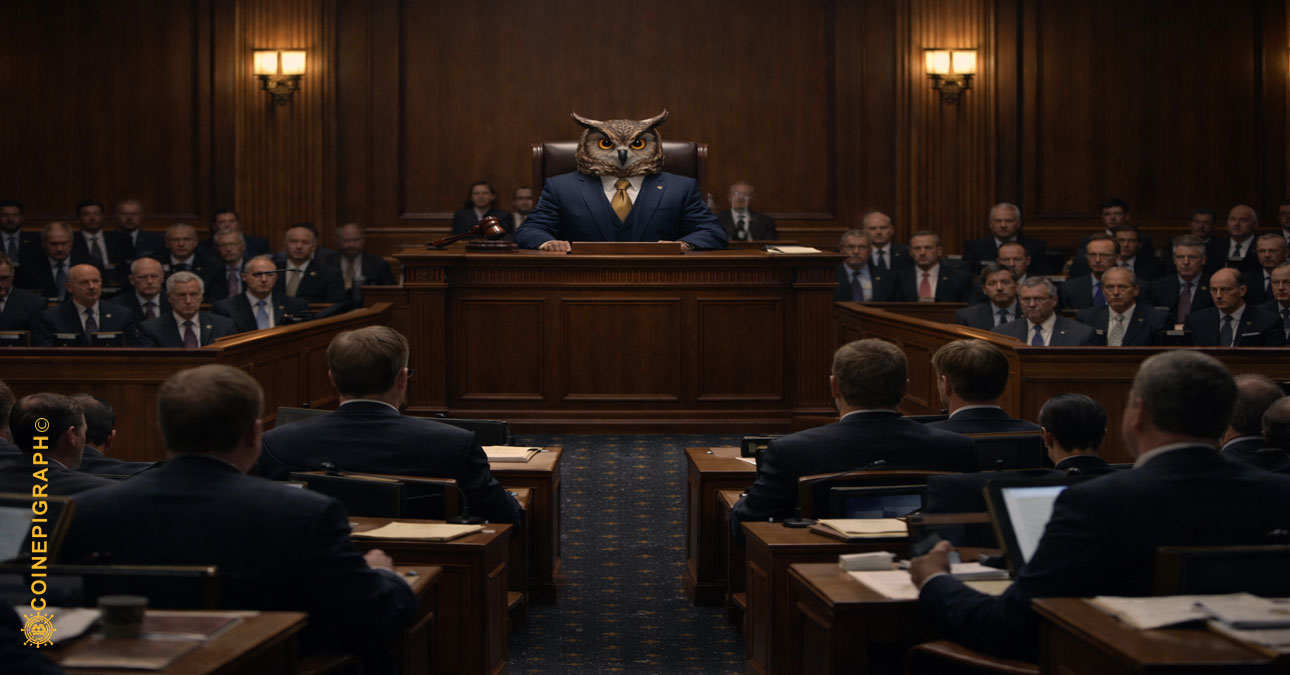
At a House Financial Services Committee hearing, crypto and capital markets executives told lawmakers that tokenized securities should fall under existing investor protection and surveillance frameworks. The message was clear: blockchain does not eliminate securities law — it relocates it.
The tokenization of financial assets is accelerating.
But at this week’s U.S. House Financial Services Committee hearing, one theme cut through the noise: tokenized securities are still securities.
Industry executives — including representatives from major financial trade associations and digital asset firms — told lawmakers that existing investor protections and financial surveillance regimes should apply to tokenized securities regardless of whether they are issued and traded on traditional infrastructure or blockchain networks.
The significance of that position is structural.
The debate is no longer about whether tokenization will occur.
It is about how it will be regulated.
Blockchain Does Not Nullify Securities Law
Tokenized securities are traditional financial instruments — equities, bonds, funds, structured products — recorded and transferred using distributed ledger technology.
What changes is the settlement rail.
What does not change is the underlying legal classification.
Testimony before the Committee emphasized that:
- Registration requirements should remain intact
- Broker-dealer obligations should continue to apply
- Market surveillance systems should not be weakened
- Anti-fraud protections must be preserved
- Audit and disclosure standards cannot be bypassed
In effect, blockchain is being treated as infrastructure, not exemption.
That is a decisive shift from earlier cycles of regulatory ambiguity.
Why Industry Is Asking for This
This is not capitulation.
It is strategic positioning.
Large financial institutions, exchanges, custodians, and digital asset firms increasingly recognize that tokenized securities cannot scale into institutional markets without regulatory certainty.
Institutional capital requires:
- Predictable enforcement frameworks
- Standardized compliance structures
- Recognized dispute resolution mechanisms
- Clear supervisory authority
Without these components, tokenized markets remain experimental.
With them, they become scalable.
The hearing suggests industry participants now prefer convergence over confrontation.
Surveillance in an On-Chain World
One of the most important points raised during testimony involved market surveillance.
Traditional securities markets rely on:
- Trade reporting systems
- Clearinghouse monitoring
- Consolidated audit trails
- Broker-dealer reporting
Tokenized securities introduce a new variable: transparent ledgers.
Blockchain infrastructure could, in theory, enhance surveillance by providing immutable transaction records.
But the hearing made clear that on-chain transparency does not replace supervisory oversight.
It complements it.
The regulatory objective is not to discard surveillance but to modernize it.
The Institutionalization of Tokenization
The broader macro theme is unmistakable.
Tokenization is migrating from crypto-native experimentation into regulated capital markets infrastructure.
Major financial institutions are exploring:
- Tokenized Treasury issuance
- On-chain fund shares
- Digital bond settlement
- Real-world asset (RWA) distribution
- Blockchain-based collateral management
But these efforts are being built within existing legal structures.
Not outside them.
That distinction will define the next phase of digital asset integration.
The End of the “Parallel System” Narrative
Earlier narratives framed tokenization as a potential parallel financial system — operating alongside, or even outside, traditional regulation.
This week’s testimony signals that such a parallel path is unlikely for securities markets.
Instead, convergence is the direction of travel.
Tokenized securities will:
- Inherit traditional regulatory frameworks
- Be supervised under existing securities law
- Integrate with established market infrastructure
- Align with investor protection mandates
Blockchain becomes an efficiency layer — not a regulatory void.
Implications for Market Structure
This convergence has several macro consequences:
- Tokenization will favor regulated intermediaries.
- Capital markets modernization will move through compliant channels.
- Institutional participation will expand once legal clarity stabilizes.
- Retail access may be shaped by existing investor qualification standards.
The structural center of gravity is shifting toward institutional-grade blockchain integration.
Not deregulated experimentation.
The Bigger Signal
Congress did not appear hostile to tokenization.
Nor did industry appear resistant to oversight.
The shared acknowledgment was pragmatic:
Blockchain-based securities markets must operate within investor protection frameworks that have governed U.S. markets for decades.
This is not an anti-crypto posture.
It is a market integrity posture.
And for institutional capital allocators, that clarity reduces systemic friction.

Closing Frame: Infrastructure Evolves — Law Persists
Tokenization does not repeal securities law.
It digitizes market plumbing.
The question facing capital markets is not whether blockchain can replace regulation.
It is whether blockchain can modernize settlement, issuance, and transparency while preserving trust in financial markets.
This week’s hearing suggests that the path forward is neither deregulation nor prohibition.
It is structural integration.
The future of tokenized securities will not be built in regulatory shadows.
It will be built in the open — within the architecture of existing law.
And that may ultimately accelerate adoption more than exemption ever could.
At CoinEpigraph, we are committed to delivering digital-asset journalism with clarity, accuracy, and uncompromising integrity. Our editorial team works daily to provide readers with reliable, insight-driven coverage across an ever-shifting crypto and macro-financial landscape. As we continue to broaden our reporting and introduce new sections and in-depth op-eds, our mission remains unchanged: to be your trusted, authoritative source for the world of crypto and emerging finance.
— Ian Mayzberg, Editor-in-Chief
The team at CoinEpigraph.com is committed to independent analysis and a clear view of the evolving digital asset order.
To help sustain our work and editorial independence, we would appreciate your support of any amount of the tokens listed below. Support independent journalism:
BTC: 3NM7AAdxxaJ7jUhZ2nyfgcheWkrquvCzRm
SOL: HxeMhsyDvdv9dqEoBPpFtR46iVfbjrAicBDDjtEvJp7n
ETH: 0x3ab8bdce82439a73ca808a160ef94623275b5c0a
XRP: rLHzPsX6oXkzU2qL12kHCH8G8cnZv1rBJh TAG – 1068637374
SUI – 0xb21b61330caaa90dedc68b866c48abbf5c61b84644c45beea6a424b54f162d0c
and through our Support Page.
🔍 Disclaimer: CoinEpigraph is for entertainment and information, not investment advice. Markets are volatile — always conduct your own research.
COINEPIGRAPH™ does not offer investment advice. Always conduct thorough research before making any market decisions regarding cryptocurrency or other asset classes. Past performance is not a reliable indicator of future outcomes. All rights reserved | 版权所有 ™ © 2024-2029.