


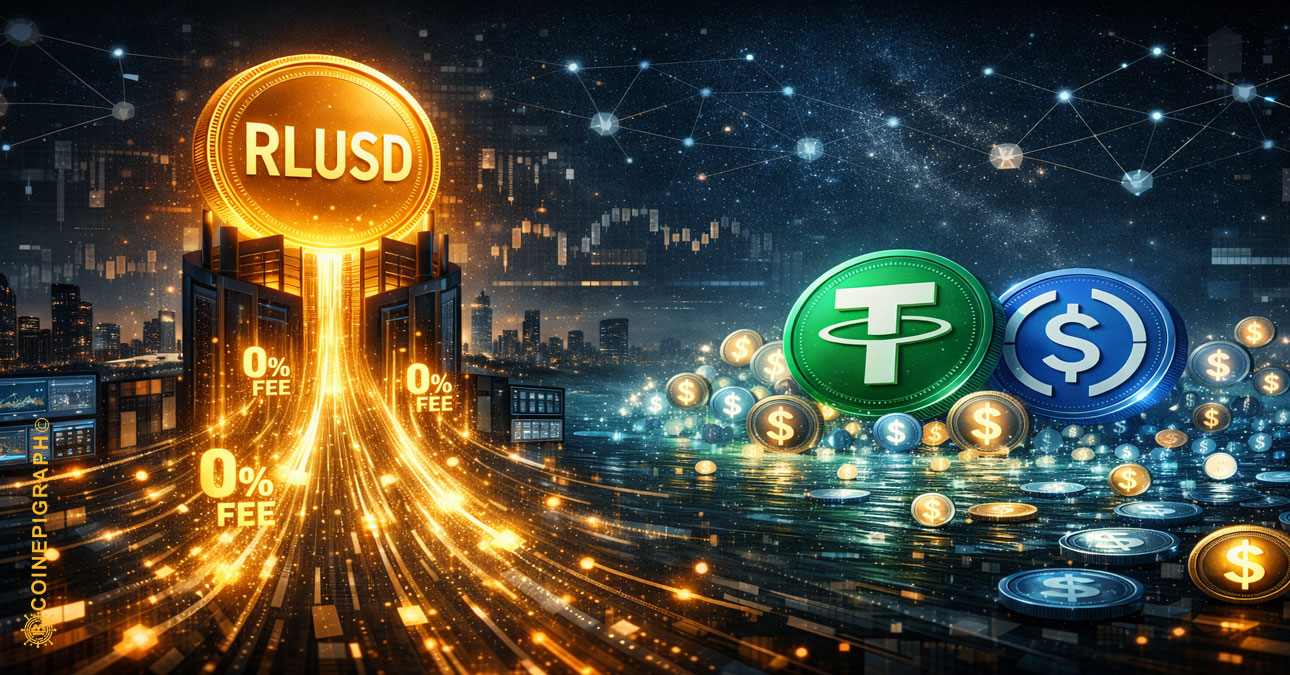
Binance’s zero-fee listing of RLUSD signals more than a new trading pair — it marks a structural escalation in the competition for on-chain dollar dominance.
By CoinEpigraph Editorial Desk | March 25, 2026
Binance has launched trading for Ripple USD (RLUSD) with zero-fee incentives, positioning the stablecoin as a challenger to USDT and USDC. While the move appears promotional, it carries deeper implications for liquidity routing, exchange influence over monetary rails, and the evolving architecture of digital dollar settlement.
A Listing — or a Liquidity Strategy?
On the surface, Binance’s addition of RLUSD appears routine. Exchanges list new assets frequently, often accompanied by fee promotions.
But stablecoins are not routine assets.
They are the settlement backbone of digital markets. They function as on-chain dollar proxies, collateral instruments, and liquidity conduits across both centralized exchanges and decentralized finance protocols.
When the largest global exchange introduces a zero-fee structure for a dollar-pegged asset, the impact extends beyond trading volume. It directly influences capital routing.
Zero-fee programs are not neutral. They reshape order flow.
Why Zero Fees Matter
Stablecoin dominance is not determined by branding alone. It is determined by:
• Liquidity depth
• Trading pair integration
• Collateral usage
• Exchange routing preference
• Fee economics
By eliminating trading fees on RLUSD pairs, Binance effectively lowers friction for migration.
Even marginal fee differences can alter high-frequency and institutional routing decisions. Algorithmic strategies optimize for cost efficiency. Over time, volume can concentrate where execution is cheapest.
If liquidity concentrates, network effects compound.
This is how stablecoin market share shifts.
The Stablecoin Power Structure
The current stablecoin hierarchy is anchored by:
• USDT (Tether) — dominant in offshore liquidity corridors
• USDC (Circle) — aligned with U.S.-regulated banking rails
• DAI and others — collateral-backed alternatives
RLUSD enters as a Ripple-associated dollar instrument with enterprise and cross-border positioning.
Binance’s involvement amplifies its potential relevance.
Because exchanges act as liquidity gatekeepers.
They determine:
• Which pairs receive visibility
• Which assets receive fee incentives
• Which stablecoins become collateral defaults
• Which tokens integrate across futures and derivatives
Exchange design choices shape monetary architecture.
Is This a Direct Challenge to USDT?
USDT remains the dominant global trading stablecoin, particularly in offshore markets. Its liquidity depth and integration across exchanges make displacement difficult.
However, stablecoin market share does not require total replacement to be meaningful.
If RLUSD captures incremental routing share through zero-fee incentives, it can:
• Divert short-term order flow
• Establish liquidity pools
• Build collateral relevance
• Encourage cross-pair adoption
The challenge is not immediate dethronement.
It is incremental erosion.
The Economics of Liquidity Subsidy
Zero-fee trading is a subsidy.
Exchanges do not remove fees without strategic calculation.
Possible motivations include:
• Driving liquidity diversification
• Strengthening ecosystem partnerships
• Reducing reliance on dominant stablecoins
• Positioning for regulatory alignment
• Creating leverage in stablecoin negotiations
Stablecoin dominance translates into influence over:
• Treasury management
• On-exchange settlement
• Derivatives collateralization
• Institutional onboarding flows
The stablecoin that anchors liquidity influences the broader capital stack.
Regulatory and Structural Implications
Stablecoins increasingly sit at the intersection of regulation and capital mobility.
USDC operates within a regulated U.S. framework.
USDT has historically thrived in less restrictive jurisdictions.
RLUSD’s positioning will likely emphasize compliance optics and enterprise integration.
If Binance’s zero-fee structure accelerates RLUSD adoption, regulatory dynamics become part of the competitive landscape.
Stablecoin competition is not purely market-driven.
It is policy-aware.
Capital Routing in the Digital Dollar Era
The deeper issue is monetary architecture.
Stablecoins function as:
• On-chain eurodollars
• Collateral bridges
• Cross-border settlement rails
• Treasury liquidity buffers
Control over stablecoin liquidity is not merely commercial advantage.
It shapes capital mobility.
When exchanges alter fee structures, they indirectly influence which digital dollars move fastest and cheapest.
Over time, routing preference becomes structural reality.
Is This Structural or Tactical?
The key question for allocators is whether Binance’s zero-fee RLUSD launch represents:
A tactical volume campaign
or
A structural shift in dollar-token competition
If incentives persist and liquidity builds organically, RLUSD can establish durable relevance.
If incentives fade and liquidity retracts, the impact remains temporary.
History shows that stablecoin dominance is sticky — but not immune to strategic intervention.
The Broader Market Signal
Stablecoin competition has entered a new phase.
Exchanges are no longer passive listing venues. They are active architects of liquidity incentives.
Zero-fee mechanics signal escalation in the fight for dollar-token primacy.
For institutional participants, the implications extend beyond trading costs.
They influence:
• Collateral selection
• Counterparty exposure
• Settlement risk
• Regulatory optics
• Liquidity concentration
Stablecoins are not static utilities.
They are evolving monetary instruments competing for structural control of digital capital flows.
Binance’s RLUSD launch is less about a new token — and more about who steers the dollar rails in an increasingly digital market system.
At CoinEpigraph, we are committed to delivering digital-asset journalism with clarity, accuracy, and uncompromising integrity. Our editorial team works daily to provide readers with reliable, insight-driven coverage across an ever-shifting crypto and macro-financial landscape. As we continue to broaden our reporting and introduce new sections and in-depth op-eds, our mission remains unchanged: to be your trusted, authoritative source for the world of crypto and emerging finance.
— Ian Mayzberg, Editor-in-Chief
The team at CoinEpigraph.com is committed to independent analysis and a clear view of the evolving digital asset order.
To help sustain our work and editorial independence, we would appreciate your support of any amount of the tokens listed below. Support independent journalism:
BTC: 3NM7AAdxxaJ7jUhZ2nyfgcheWkrquvCzRm
SOL: HxeMhsyDvdv9dqEoBPpFtR46iVfbjrAicBDDjtEvJp7n
ETH: 0x3ab8bdce82439a73ca808a160ef94623275b5c0a
XRP: rLHzPsX6oXkzU2qL12kHCH8G8cnZv1rBJh TAG – 1068637374
SUI – 0xb21b61330caaa90dedc68b866c48abbf5c61b84644c45beea6a424b54f162d0c
and through our Support Page.
🔍 Disclaimer: CoinEpigraph is for entertainment and information, not investment advice. Markets are volatile — always conduct your own research.
COINEPIGRAPH™ does not offer investment advice. Always conduct thorough research before making any market decisions regarding cryptocurrency or other asset classes. Past performance is not a reliable indicator of future outcomes. All rights reserved | 版权所有 ™ © 2024-2029.