


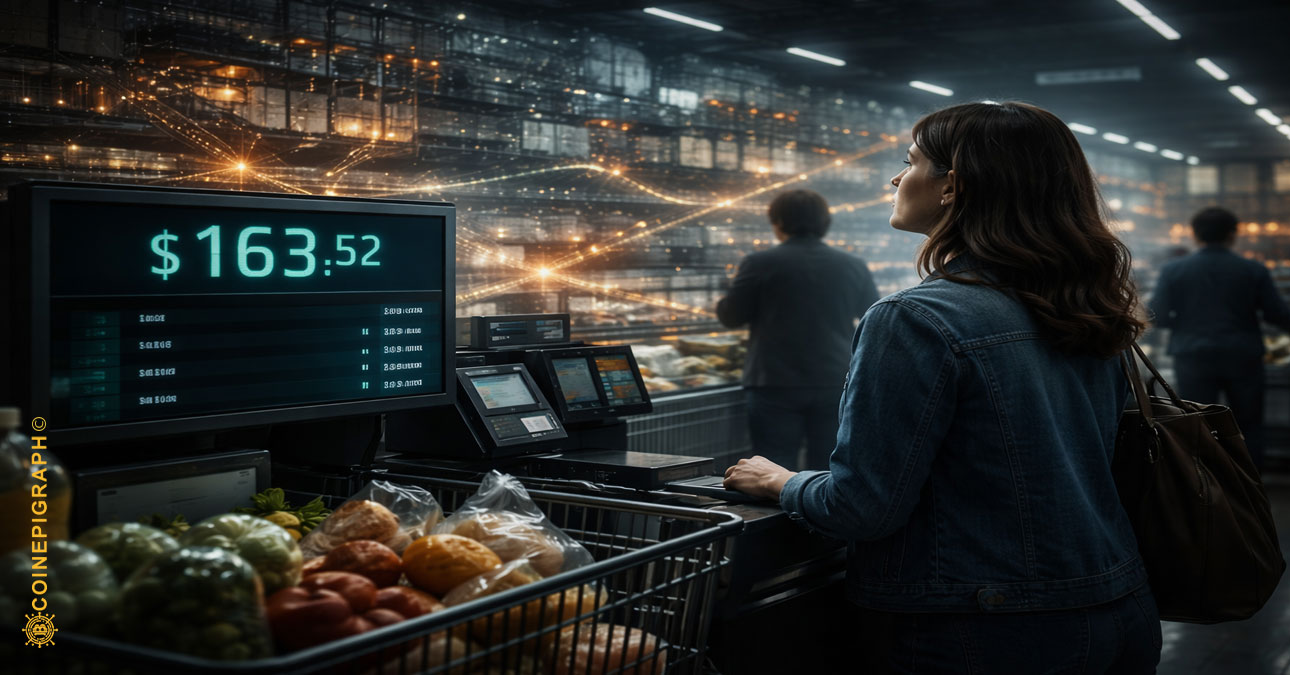
Inflation doesn’t need to be uniform to feel that way.
It only needs to be utilized.
By CoinEpigraph Editorial Desk | April 16, 2026
Debates around “greedflation” often miss a more precise dynamic. While pricing behavior varies across sectors, periods of inflation reveal where firms can utilize pricing power—producing outcomes that feel uniform to consumers even when the underlying drivers are not.
The Word and the Friction Behind It
“Greedflation” has entered the financial lexicon as a way to describe a perceived imbalance during inflationary periods. The implication is direct: companies raise prices beyond what costs require, expanding margins under the cover of broader price increases.
The term resonates because it simplifies a complex system into a single cause. It also invites resistance for the same reason.
At the macro level, the data does not support a uniform explanation. Pricing behavior differs across industries, cost structures vary, and margins expand in some areas while compressing in others.
Yet the persistence of the term suggests it is pointing to something real—even if it misnames it.
The Role of Pricing Power
What explains the divergence between uneven data and a more uniform perception?
Why do consumers feel inflation as broadly consistent when underlying drivers are not? Because inflation reveals where pricing power can be utilized—and where it cannot.
Data from the Federal Reserve Bank of St. Louis has shown that, at points in the recent cycle, corporate profits increased at a faster rate than labor compensation. This does not imply that all firms expanded margins indiscriminately. It does indicate that some sectors were able to pass through price increases more effectively than others.
In those sectors, pricing power was not theoretical. It was exercised.
Uneven Inputs, Aggregated Outcomes
Inflation is not a single force. It is the result of multiple pressures:
- supply chain disruption
- energy cost volatility
- shifts in demand
- fiscal expansion
Each moves differently across the economy. Each resolves at its own pace.
But consumers do not encounter these pressures individually. They encounter them at the point of payment.
Groceries, rent, transportation, and services adjust at different rates, but over time those adjustments begin to overlap. The result is not a synchronized system, but a synchronized experience.
What is uneven in structure becomes unified in perception.
The Moment Pricing Is Utilized
Pricing power is not constant. It is conditional.
During periods of stable prices, competition and demand sensitivity tend to limit how far firms can move. Inflation changes that environment. As prices rise broadly, the threshold for acceptance shifts. Consumers expect increases, even if they do not welcome them.
That expectation creates an opening.
Firms with sufficient market position, brand strength, or demand resilience can utilize that opening. They do not create inflation on their own, but they can extend it—capturing margin where conditions allow.
This is not universal behavior. It is selective.
But selection, at scale, is enough to influence outcomes.
Capital Markets Implication
For capital markets, the distinction between “greed” and utilization matters.
The former implies intent. The latter describes capability.
When inflation exposes where pricing power exists, it also signals where capital is likely to concentrate. Firms that can maintain or expand margins under cost pressure become more attractive, not less. Their ability to utilize pricing power becomes a feature of their valuation, not a liability.
At the same time, sectors without that flexibility face a different trajectory. Margin compression, cost absorption, and reduced pricing leverage create a divergence that markets tend to recognize over time.
This is how inflation redistributes—not only between consumers and producers, but across firms themselves.

Closing Signal: What the Word Misses
“Greedflation” captures the frustration of higher prices, but it obscures the mechanism behind them.
Inflation does not operate evenly across the economy. It reveals where pricing power can be exercised and where it cannot. The outcome may feel uniform, but it is produced by a series of uneven decisions, conditions, and constraints.
The more precise question is not whether firms raised prices.
It is where they were able to utilize the ability to do so—and why.
At CoinEpigraph, we are committed to delivering digital-asset journalism with clarity, accuracy, and uncompromising integrity. Our editorial team works daily to provide readers with reliable, insight-driven coverage across an ever-shifting crypto and macro-financial landscape. As we continue to broaden our reporting and introduce new sections and in-depth op-eds, our mission remains unchanged: to be your trusted, authoritative source for the world of crypto and emerging finance.
— Ian Mayzberg, Editor-in-Chief
The team at CoinEpigraph.com is committed to independent analysis and a clear view of the evolving digital asset order.
To help sustain our work and editorial independence, we would appreciate your support of any amount of the tokens listed below. Support independent journalism:
BTC: 3NM7AAdxxaJ7jUhZ2nyfgcheWkrquvCzRm
SOL: HxeMhsyDvdv9dqEoBPpFtR46iVfbjrAicBDDjtEvJp7n
ETH: 0x3ab8bdce82439a73ca808a160ef94623275b5c0a
XRP: rLHzPsX6oXkzU2qL12kHCH8G8cnZv1rBJh TAG – 1068637374
SUI – 0xb21b61330caaa90dedc68b866c48abbf5c61b84644c45beea6a424b54f162d0c
and through our Support Page.
🔍 Disclaimer: CoinEpigraph is for entertainment and information, not investment advice. Markets are volatile — always conduct your own research.
COINEPIGRAPH™ does not offer investment advice. Always conduct thorough research before making any market decisions regarding cryptocurrency or other asset classes. Past performance is not a reliable indicator of future outcomes. All rights reserved | 版权所有 ™ © 2024-2029.