


CoinEpigraph Editorial Desk | October 11, 2025
TL;DR
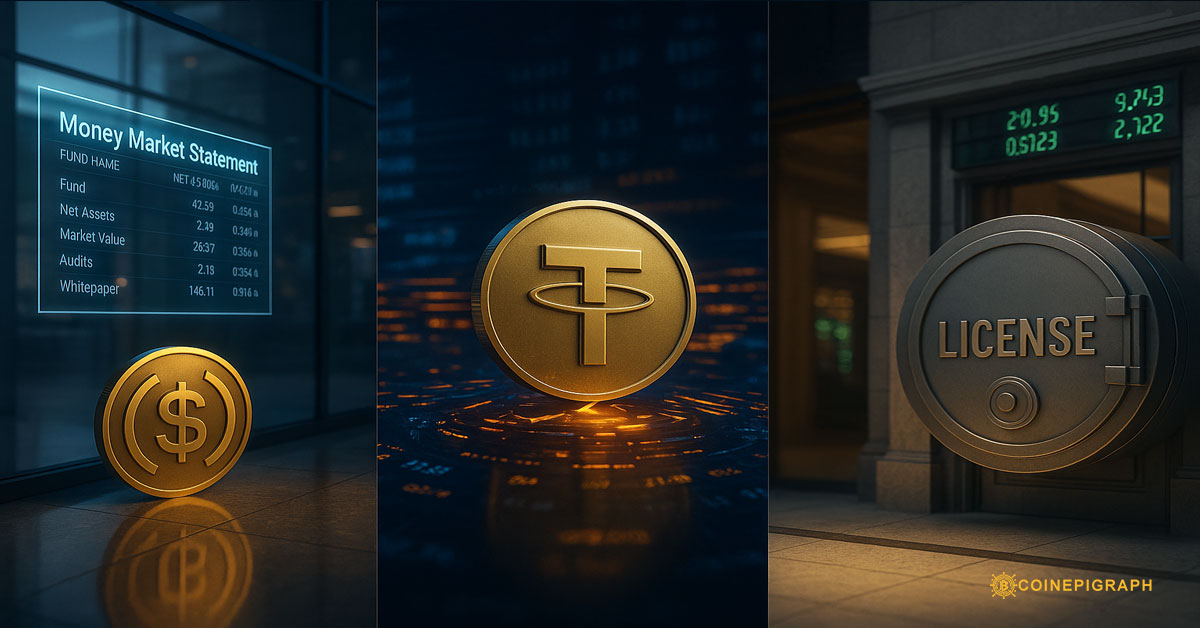
Stablecoins have split into three camps: regulated money-market wrappers (USDC/PYUSD), high-yield reserve machines (USDT), and bank-grade deposit tokens & sovereign-aligned coins (MiCA/Asia frameworks, big-bank pilots). The contest isn’t just peg stability; it’s who owns the distribution, the reserves, and the license. The new edge: transparent treasuries, interoperable rails, and policy alignment that travels across borders.
The new map: three models, one battlefield
- Money-market wrappers (USDC, PYUSD): Circle parks reserves in an SEC-registered government money fund run by BlackRock (USDXX), publishing daily portfolio data—turning USDC into a transparent, low-duration cash rail. PayPal’s PYUSD leans on Paxos and has expanded distribution from PayPal/Venmo to additional chains and wallets. Together, this camp optimizes regulatory optics + distribution.
- Profit-max reserves (USDT): Tether’s attestation shows large allocations to U.S. Treasuries and a growing Bitcoin/Gold sleeve that supercharges earnings—and scrutiny. It reported multi-billion quarterly net income in 2025 and disclosed substantial BTC holdings as part of a “decentralized reserve” strategy. That’s yield + narrative as a moat.
- Bank-grade tokens & sovereign rails: From Europe’s MiCA to Hong Kong and Singapore, policy makers are codifying licensed fiat-referenced tokens. Meanwhile, major banks are piloting deposit-token or G7-stablecoin initiatives—a bid to keep payments profits in-house and align with prudential rules. This is license + incumbency.
Why it matters: Whoever wins this map sets the standard for how dollars (and other G10 currencies) travel across open networks—and who gets paid to move them.
Policy fronts: MiCA, Asia’s playbook, and the U.S. standoff
EU (MiCA): Since mid-2024, EU rules governing e-money tokens (EMTs) and asset-referenced tokens (ARTs) have phased in—capital, reserve quality, audits, and whitepaper duties—making Europe the first major bloc with a comprehensive, live regime. Result: issuers tune products for bank-like obligations and pan-EU passporting.
Hong Kong & Singapore: Hong Kong passed a licensing law (2025) for fiat-referenced issuers; Standard Chartered is already jockeying to issue an HKD-backed coin with partners. Singapore’s MAS finalized a global-template framework emphasizing single-currency pegs (SGD/G10), high-quality reserves, and redemption discipline. Asia is building for banks to play.
United States: Multiple bills (e.g., Senate framework and House proposals like the 2025 STABLE Act) are in play but not harmonized. The policy gap hasn’t stopped market growth, but it does keep bank issuers on the sidelines and leaves oversight fragmented.
Reserves are the product
USDC/USDXX: Short-duration Treasuries via BlackRock; daily transparency, 2a-7 constraints; low tracking error to $1.00 NAV. The pitch to treasurers and fintechs: compliance-grade cash with API portability.
USDT: Tether’s 2025 attestation cites >$120B Treasuries and strong net profits; BTC/gold sleeves amplify returns and add optionality (and volatility) to equity value—without touching the $1 redemption promise. For crypto-native venues, yield-rich reserves subsidize liquidity incentives. But they elevate narrative and regulatory risk.
Banks/Deposit tokens: J.P. Morgan’s deposit-token research and pilots point to a model where tokens remain on-core bank balance sheets—clean for auditors, limited for open-access. If big-bank G7 coins advance, expect strict KYC, walled-garden rails, and tight interoperability with securities tokenization.
Distribution is destiny
- Fintech super-apps: PYUSD’s PayPal/Venmo integration and multi-chain send create a consumer onramp that stablecoin-first startups can’t easily replicate. Distribution > brand.
- Institutional cash ops: USDC’s money-fund structure + Circle’s APIs keep winning B2B payments, off-exchange settlement, and on-chain treasury tooling.
- Exchanges/DeFi: USDT’s depth on CEX/DEX pairs still dominates risk-seeking flows. The incentive loop (market maker financing + yield) is self-reinforcing—until it isn’t.
The new reserve race (and how to score it)
Transparency: Daily look-through (portfolio + duration) beats quarterly attestations. Score: USDC/PYUSD high; USDT improving but less granular.
Duration risk: Shorter WAM = tighter peg under stress. (USDXX sits in teens-day WAM.)
Optionality: BTC/gold sleeves create upside and narrative gravity but add perception risk to a “cash equivalent.”
Licensability: MiCA/HK/MAS alignment is a distribution superpower for banks and fintechs operating cross-border.
Interoperability: Multi-chain issuance + messaging (e.g., PYUSD’s expansion) reduces vendor lock-in; expect cross-chain stablecoin settlement as table stakes.
What changes if big banks really enter?
The “G7 coin” pilots signal a future where bank liabilities (not startup IOUs) circulate as programmable money. Expect:
- Tighter KYC perimeters and fewer permissionless endpoints;
- Seamless linkages to tokenized T-bills, repos, and commercial paper;
- Pressure on incumbent stablecoins to obtain EU/Asian licenses and deepen disclosures.
If banks move, startups must differentiate on open access, composability, and global distribution rather than simply “more yield.”
Risks that markets underprice
- Jurisdictional fragmentation: A coin “legal” in the EU may still trip bank policies in the U.S.; watch for venue-specific liquidity gaps.
- Custody/creation chokepoints: If a key custodian/AP halts, secondary markets can premium/discount—fast. (Money-fund plumbing matters.)
- Policy whiplash: U.S. bills inch forward, but any adverse interpretation (accounting, AML) can reroute flows overnight.
- Narrative shocks: BTC-linked reserves are great—until BTC volatility reframes the “cash” conversation for risk committees.
A practical dashboard for operators & treasurers
- Reserve WAM & look-through (daily preferred)
- Chain coverage & settlement venues (CEX, prime brokers, fiat ramps)
- Licenses held & passportability (MiCA EMT, HK license progress, MAS recognition)
- Creation/redemption latency (hours, not days)
- Counterparty stack (custodian, money-fund, auditors)
- Stress drill cadence (publish post-mortems; measure time-to-cash)

Bottom line
This is no longer a “which dollar is most stable” debate. It’s a platform war over who owns programmable cash: fintech networks with money-fund rails, crypto-native giants with yield-heavy reserves, or licensed banks plugging tokenized finance into core deposit plumbing. The winners will pair transparent reserves with border-portable compliance and distribution that actually moves people and payments.
At CoinEpigraph, we are committed to delivering digital-asset journalism with clarity, accuracy, and uncompromising integrity. Our editorial team works daily to provide readers with reliable, insight-driven coverage across an ever-shifting crypto and macro-financial landscape. As we continue to broaden our reporting and introduce new sections and in-depth op-eds, our mission remains unchanged: to be your trusted, authoritative source for the world of crypto and emerging finance.
— Ian Mayzberg, Editor-in-Chief
The team at CoinEpigraph.com is committed to independent analysis and a clear view of the evolving digital asset order.
To help sustain our work and editorial independence, we would appreciate your support of any amount of the tokens listed below. Support independent journalism:
BTC: 3NM7AAdxxaJ7jUhZ2nyfgcheWkrquvCzRm
SOL: HxeMhsyDvdv9dqEoBPpFtR46iVfbjrAicBDDjtEvJp7n
ETH: 0x3ab8bdce82439a73ca808a160ef94623275b5c0a
XRP: rLHzPsX6oXkzU2qL12kHCH8G8cnZv1rBJh TAG – 1068637374
SUI – 0xb21b61330caaa90dedc68b866c48abbf5c61b84644c45beea6a424b54f162d0c
and through our Support Page.
🔍 Disclaimer: CoinEpigraph is for entertainment and information, not investment advice. Markets are volatile — always conduct your own research.